
You might have a dream of a lush food forest or a self-sustaining homestead. But before you buy a single plant, you need a plan. Permaculture design is the roadmap that gets you there. It helps you organize your space so that it works efficiently. Good design saves you from making costly mistakes. It ensures that your house, garden, and animals all work together as a single unit. This guide will teach you how to think like a designer.
It Is Not Just Gardening
Many people confuse permaculture with organic gardening. Gardening is just one part of the picture. Design is the whole frame. When you design, you look at relationships. You ask how the chicken coop connects to the vegetable patch. You ask how your roof connects to your water tank.
The goal is to create a closed loop. In a well-designed system, waste from one element becomes food for another. For example, your kitchen scraps feed the chickens. The chickens produce manure. The manure feeds the compost. The compost feeds the garden. The garden feeds you. This cycle reduces waste and labor.
The Map Is Not the Territory
Every good design starts with a base map. You cannot plan in your head. You need to put it on paper. Sketch the outline of your property. Add the permanent structures like your house, driveway, and large trees.
Now you must observe the invisible forces. We call this sector analysis. You need to identify where the energy comes from. Draw arrows on your map to show the summer sun and the winter sun. Mark the direction of the prevailing winds. Identify noise from the road or potential fire risks.
This information tells you where to place things. You would not put a delicate wind-sensitive tree in the path of a strong gale. You would not put a solar panel where large trees block the sun. This analysis protects your system from outside forces.
The Zone System
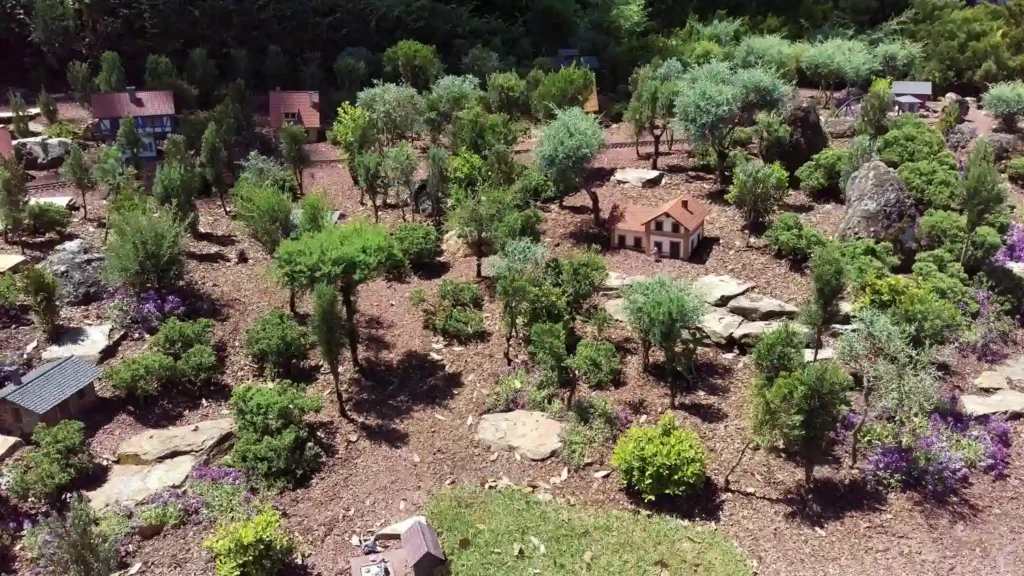
Zoning is the most famous tool in permaculture. It organizes your property based on human energy. We place elements according to how often we need to visit them.
Zone 0 is the center of activity. This is your house.
Zone 1 is directly outside your door. You visit this area multiple times a day. Here you place your herb garden, salad greens, and seedling nursery. If you put your parsley at the back of the yard, you will never use it. If it is by the kitchen door, you will use it every night.
Zone 2 contains things you visit once a day. This includes your chickens, compost bin, and main vegetable crops. You might check these on your way to work or in the evening.
Zone 3 is for commercial crops or main orchards. You visit this area a few times a week to harvest or prune. It does not need daily care.
Zone 4 is for timber production and grazing animals. It is semi-wild. You might only go there once a month or seasonally.
Zone 5 is the wilderness. We do not manage this zone. We observe it. It is a place for nature to rest and regenerate.
Connect Your Elements
In a standard backyard, objects are often scattered randomly. The shed is in one corner and the garden is in another. This creates unnecessary work. You have to walk back and forth carrying tools and water.
Permaculture design focuses on relative location. We place things together to save steps. Imagine you have a chicken coop. If you place it next to your garden, you can easily throw weeds to the chickens. If you place it near your orchard, the chickens can forage for bugs under the fruit trees.
By placing these elements side by side, they help each other. The chickens do the weeding and fertilizing for you. This creates a functional connection.
Stack Your Functions
Another key rule is that every element should perform multiple jobs. A simple fence is just a barrier. But in a permaculture system, that fence can do more. It can support climbing vines like grapes or kiwis. It can reflect sunlight to heat up a nearby garden bed. It can block the cold wind.
A fruit tree provides food. But it also provides shade for shade-loving plants. Its roots hold the soil together. Its flowers feed the bees. When you choose an element for your design, ask yourself what else it can do. If it only does one thing, try to find a better solution.

The Edge Effect
Nature loves edges. The place where the forest meets the field is often the most diverse area. It has animals from the forest and animals from the field. It also has unique species that only live on the border.
We try to increase the amount of edge in our designs. instead of a straight garden path, we might make it curved. This creates more surface area for planting. We build ponds with wavy shorelines to create more habitat for frogs and fish. By maximizing the edge, you maximize the productivity of your space.
Start Your Plan Today
You do not need to be an artist to draw a design. You just need to be observant. Grab a piece of paper and a pencil. Walk your land. Look for the sunny spots and the wet spots. Think about what you want to achieve.
Do not rush to fill every empty space. Good design takes time. It evolves as you learn more about your land. If you start with a solid plan, you will save yourself years of hard work. You will build a system that is beautiful, productive, and sustainable.
Essay providers with dissertation ghostwriter EssayPro supply original academic papers crafted to meet the demands of modern education.
Writing papers often requires time students do not always have. Writing papers for money https://essayservice.com/write-essays-for-money supports academic progress by helping students stay on schedule.